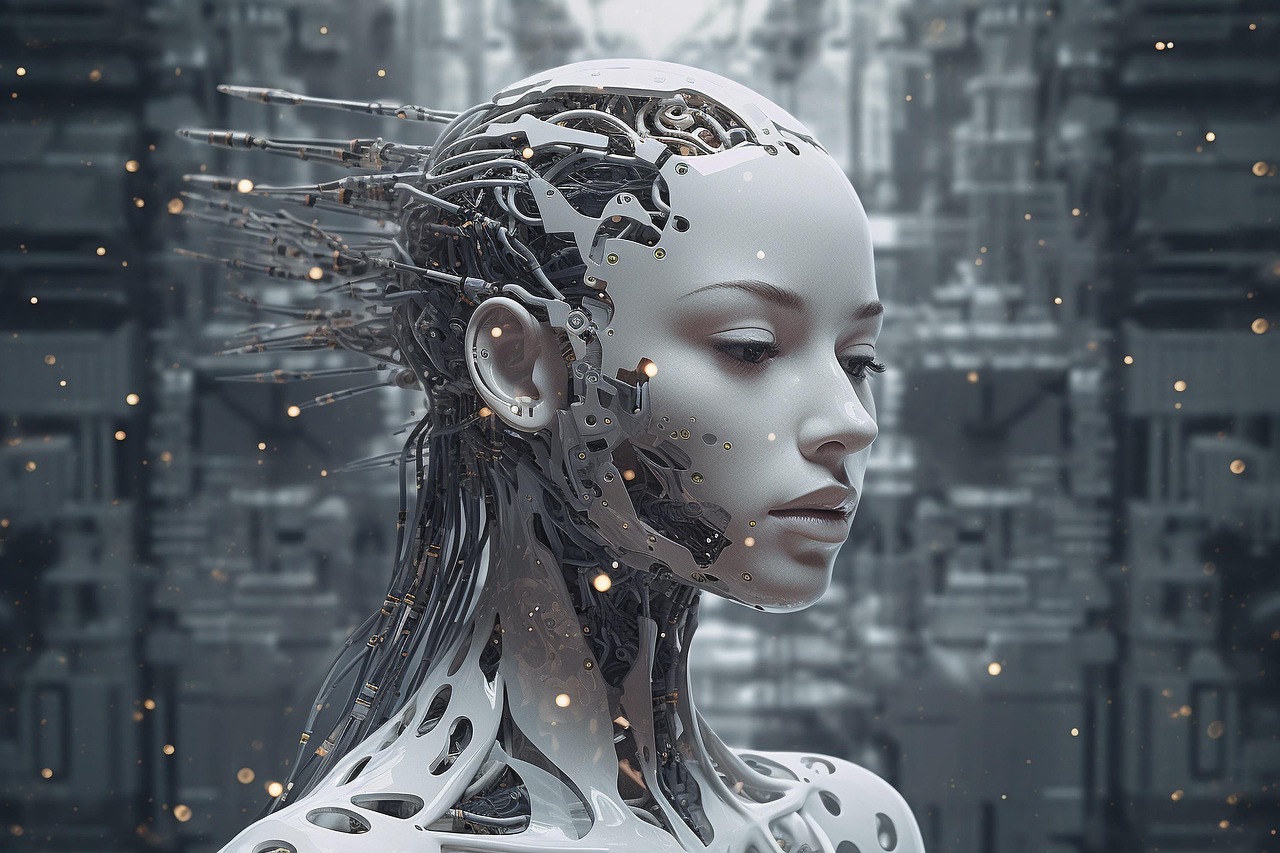

In the bustling corridors of Shenzhen, Tencent is quietly rewriting a chapter in the story of artificial intelligence. The same giant that once laughed at the idea of cloud‑based gaming is now pouring resources into what some are calling the world’s most sophisticated 3D AI models. The move isn’t just a tech upgrade; it’s a shift that could ripple through entertainment, art, engineering, and beyond.
From Mobile Legends to Machine‑Learning Marvels
Tencent’s roots are deep. It began as a social network, morphed into a mobile gaming empire, and now stands on the brink of a new frontier. What makes the company’s pivot so intriguing is the sheer scale of its data reservoir: billions of users, endless gameplay logs, and a trove of 3D assets collected over decades. Harnessing this data, the company is training neural networks that can understand, generate, and manipulate three‑dimensional environments with unprecedented fidelity.
What Exactly Is a 3D AI Model?
Think of a 3D AI model as a digital sculptor that can create, modify, and predict objects in space. Unlike traditional AI that flits between images or text, these models ingest meshes, textures, and physics parameters. They learn how objects behave, how light refracts, and how characters should move—all within a virtual sandbox. The result is a system capable of generating realistic worlds on the fly.
Building the Engine Behind the Magic
Tencent’s approach blends high‑performance GPU clusters with proprietary algorithms that compress and accelerate inference. The company’s engineers experiment with graph neural networks that capture spatial relationships, while reinforcement learning guides the AI to produce coherent gameplay elements. The training pipeline is a symphony of data ingestion, augmentation, and continuous feedback loops, all orchestrated by an in‑house AI research team that rivals the best in the West.
Game Design Gets a Quantum Leap
For game designers, the implications are immediate. NPCs powered by these 3D models can navigate labyrinthine environments, react to player actions in real time, and even evolve their appearance based on narrative context. Procedural generation, long a staple of indie titles, is now moving into the realm of cinematic realism. Imagine a fantasy world where every rock, tree, and creature feels handcrafted, yet is generated on demand, reducing development time and storage costs.
Concrete Examples: From Myth to Reality
Take, for instance, the recent title “Echoes of the Forgotten,” a sandbox MMO that leverages Tencent’s 3D AI to populate its vast continent. Environments shift subtly each day, creating a living ecosystem that players can explore without ever breaking the narrative thread. The game’s success demonstrates that high‑fidelity AI generation can coexist with engaging storytelling, a balance that has long eluded many developers.
Beyond Gaming: The Cross‑Industry Explosion
When a company that has built the world’s largest gaming ecosystem ventures into 3D AI, the stakes rise beyond pixels. Film studios can now generate realistic virtual sets without costly on‑site shoots. Architecture firms can deliver immersive walkthroughs that adapt to client feedback in real time. Even autonomous vehicle research benefits from AI that can simulate complex, unpredictable traffic scenarios with astonishing detail.
Comparing Titans: Tencent and Its Rivals
NVIDIA’s DLSS and other graphics technologies have long dominated the hardware side of the equation, while OpenAI and Google focus on language and general AI. Tencent’s niche lies at the intersection: raw computing power, massive proprietary data, and a developer ecosystem that already embraces cloud gaming. This trinity positions the company to offer a full‑stack solution—hardware, software, and content—that could eclipse existing offerings.
Democratizing Design: A New Era for Indie Developers
One of the most exciting prospects is the democratization of high‑quality 3D content. Indie studios, often hamstrung by limited budgets, could now tap into Tencent’s AI services via a subscription model. A single API call might generate a fully textured terrain or a lifelike character, slashing production timelines and allowing creators to focus on narrative instead of rendering.
Monetization and Intellectual Property: A Double‑Edged Sword
With great power comes the need for careful governance. As AI models start to generate unique assets, questions about ownership and licensing loom large. Will the AI’s output belong to the developer, the AI provider, or the end user? These legal gray areas will shape the next wave of industry standards.
Challenges on the Horizon
High‑performance 3D AI is not without pitfalls. Data privacy concerns arise when models learn from millions of players’ behaviors. Bias can creep into the training data, leading to unintended content. Moreover, regulatory frameworks in China and the rest of the world are still catching up to the realities of AI‑generated media.
Can AI Replace Human Designers?
Most people will answer “no,” but the question is worth pondering. While AI can produce stunning visuals and realistic physics, it still struggles with nuanced storytelling, emotional resonance, and cultural sensitivity. The best outcomes likely come from a hybrid approach where designers guide the AI’s creative process.
Looking Ahead: The Cloud, the Edge, the Infinite Canvas
As cloud infrastructure evolves, so will the capabilities of 3D AI. Edge computing could bring real‑time generation to mobile devices, while quantum processors might unlock entirely new algorithmic paradigms. The convergence of these technologies suggests a future where worlds are not just built but are alive, responsive, and endlessly unique.
Tencent’s foray into 3D AI is more than a corporate strategy; it’s a signal that the line between human imagination and machine creation is blurring. Whether you’re a developer, a gamer, or a technologist, the next decade promises to be an exciting playground where AI and creativity dance in tandem. The question isn’t whether we will see more AI‑generated worlds, but how many of them will you want to step into next.