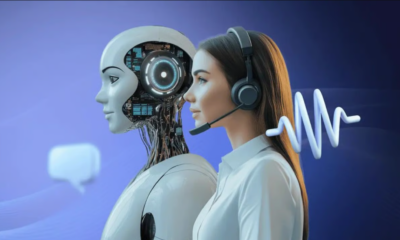

In the past year, generative AI moved from a playground for engineers to a high‑stakes laboratory for enterprises. Now the curtain is being drawn on that experimental era, and the spotlight shifts to systems that not only understand but also act—executing complex workflows with minimal human touch.
What will replace the parameter‑count race? Agency, energy efficiency, and the capacity to navigate tangled industrial ecosystems. The next twelve months will force companies to rethink their stack, governance models, and the talent that keeps the engines running.
Autonomous AI Systems Take the Wheel
Hanen Garcia, chief architect for telecommunications at Red Hat, describes 2025 as a year of trial and error. He sees 2026 as a decisive pivot toward agentic AI—software entities that reason, plan, and complete tasks without constant human supervision.
Telecommunications and heavy industry will be the first arenas for this shift. Garcia points to autonomous network operations (ANO) as the next step beyond simple automation, moving toward self‑configuring and self‑healing infrastructures. The business goal? Reverse commoditisation by prioritising intelligence over pure hardware and trimming operating costs.
Service providers are rolling out multi‑agent systems (MAS). Instead of a single monolithic model, distinct agents collaborate on multi‑step missions, handling intricate interactions on their own. But as autonomy grows, so does the attack surface.
Emmet King, founding partner at J12 Ventures, warns that when AI agents can execute tasks on their own, hidden instructions embedded in images and workflows become new threat vectors. Security must shift from endpoint protection to governing and auditing autonomous AI actions.
Energy emerges as the new choke point. King argues that the availability of power, rather than model access, will determine which startups scale. “Compute scarcity is now a function of grid capacity,” he says, hinting that energy policy may become the de‑facto AI policy in Europe.
Key performance indicators will need a makeover. Sergio Gago, CTO of Cloudera, predicts enterprises will measure energy efficiency as a primary metric. “The competitive edge won’t come from the biggest models but from the most intelligent, efficient use of resources,” he notes.
Horizontal copilots that lack domain expertise or proprietary data will fail ROI tests. Buyers will measure real productivity, and the brightest gains will emerge from manufacturing, logistics, and advanced engineering—sectors where AI integrates into high‑value workflows rather than consumer interfaces.
AI Ends the Static App in 2026
Software consumption is evolving too. Chris Royles, field CTO for EMEA at Cloudera, says the traditional “app” is becoming fluid. “In 2026, AI will start to radically change how we think about apps, how they function, and how they’re built,” he explains.
Users will soon request temporary modules generated by code and a prompt, effectively replacing dedicated applications. “Once that function has served its purpose, it closes,” Royles adds, noting these disposable apps can be built and rebuilt in seconds.
Governance must keep pace. Organisations need visibility into the reasoning processes that generate these modules to catch errors before they cascade.
Data storage faces a parallel reckoning. Wim Stoop, director of product marketing at Cloudera, believes the era of “digital hoarding” is ending as storage capacity approaches its limits.
“AI‑generated data will become disposable, created and refreshed on demand rather than stored indefinitely,” Stoop predicts. Verified, human‑generated data will rise in value while synthetic content is discarded.
Specialist AI governance agents—“digital colleagues”—will monitor and secure data continuously, allowing humans to govern governance rather than enforce individual rules. For example, a security agent could automatically adjust access permissions as new data enters the environment without human intervention.
Sovereignty and the Human Element
Sovereignty remains a hot topic for European IT. Red Hat’s survey shows 92 percent of IT and AI leaders in EMEA view enterprise open‑source software as critical for achieving sovereignty. Providers will leverage existing data‑centre footprints to offer sovereign AI solutions, ensuring data stays within specific jurisdictions to meet compliance demands.
Emmet King adds that competitive advantage is moving from owning models to controlling training pipelines and energy supply. Open‑source advances allow more actors to run frontier‑scale workloads, diluting the monopoly of a few large vendors.
Workforce integration is becoming personal. Nick Blasi, co‑founder of Personos, argues that tools ignoring human nuance—tone, temperament, and personality—will soon feel obsolete. By 2026, Blasi predicts half of workplace conflict will be flagged by AI before managers even know it exists.
These systems will focus on communication, influence, trust, motivation, and conflict resolution. Blasi suggests personality science will become the operating system for the next generation of autonomous AI, offering a grounded understanding of individual behaviour rather than generic recommendations.
The era of the thin wrapper is over. Buyers now measure real productivity, exposing tools built on hype rather than proprietary data. For enterprises, competitive advantage will no longer come from renting access to a model but from controlling the training pipelines and energy supply that power it.
What Lies Ahead?
As 2026 unfolds, the fusion of autonomy, energy consciousness, and data sovereignty will reshape how businesses deploy AI. The next frontier isn’t just smarter algorithms; it’s smarter ecosystems that can reason, self‑repair, and respect the physical limits of the planet. Companies that invest in energy‑efficient architectures, robust governance, and domain‑specific intelligence will not just survive—they’ll lead.