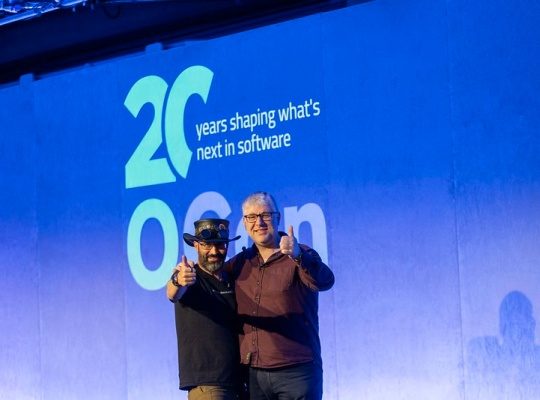

Software architects and engineering leaders are increasingly turning to a new discipline, context engineering, to address persistent failures in AI-powered coding agents. The approach was detailed in a recent presentation by technology experts Baruch Sadogursky and Patrick Debois, who argued that the root cause of many agent failures lies not in model capability but in bloated context windows and overloaded prompts.
The presentation, which focused on practical solutions, highlighted that many coding agents underperform because they are fed excessive or irrelevant data. According to Sadogursky and Debois, this practice diminishes accuracy and slows down response times. They proposed that carefully curated inputs, or the right 300 tokens, can outperform systems relying on hundreds of thousands of noisy data points.
Core Techniques for Reliable Agentic Workflows
The experts outlined several specific fixes to improve the reliability of agentic workflows. These include the use of lazy-loaded skills, which load only the necessary tools or data at the moment they are needed, rather than preloading everything. This method aims to reduce cognitive overload on the AI model and improve decision-making speed.
Another recommended practice is the adoption of versioned context artifacts. By treating prompts and context data as version-controlled assets, engineering teams can track changes, revert to previous states, and ensure consistency across different runs of an agent. This approach introduces a level of engineering rigor typically reserved for source code.
The speakers also discussed the importance of externalized memory banks. Instead of storing all historical data within the agent’s active context window, this technique involves moving long-term data to external storage and retrieving it only when necessary. This helps maintain a lean and focused operational context for the AI.
Evaluation and Benchmarking Methods
To measure the effectiveness of these strategies, Sadogursky and Debois proposed the use of LLM-as-a-judge evaluations. In this methodology, a language model is used to assess the output quality of the coding agent, providing a scalable and consistent method for scoring performance. This approach allows teams to empirically test different context configurations before deployment.
The presentation emphasized that these techniques allow organizations to transform raw markdown files and other documentation into structured, reliable, and deterministic agentic workflows. This shift moves the focus from brief engineering to a more disciplined, data-driven approach for building AI copilots and autonomous coding assistants.
For engineering leaders, the takeaway is that improving agent performance is less about waiting for more powerful models and more about refining the input architecture. By managing context as a product, teams can achieve higher accuracy, lower costs, and faster execution times.
As AI agents become more integrated into the software development lifecycle, the demand for systematic context management is expected to grow. The methods presented by Sadogursky and Debois are likely to be adopted and refined by development teams seeking to scale their automation efforts. Further developments and case studies are anticipated as more organizations apply these principles in production environments.