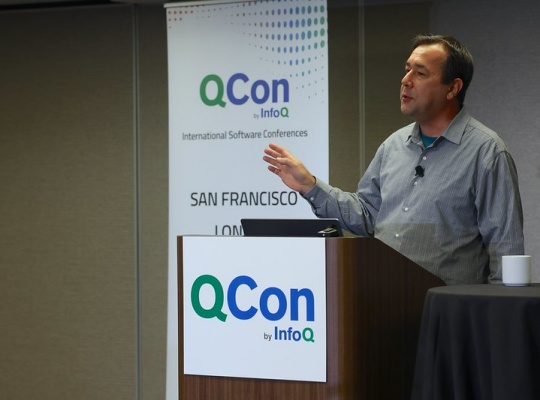

Cloud database architectures are moving toward disaggregated systems, where compute and storage operate independently, according to a recent technical presentation by Murat Demirbas, a computer science researcher. The presentation, titled "Parting the Clouds: The Rise of Disaggregated Systems," outlined how this architectural shift is being driven by cloud economics and the need for more flexible resource management.
Demirbas explained that decoupling compute from storage allows for elastic scaling, which means resources can be adjusted dynamically based on demand. This separation also improves cost efficiency because each component can be scaled and priced independently. Additionally, fault isolation is enhanced, as a failure in one layer does not necessarily compromise the other.
Background: From Paxos to Disaggregation
The presentation noted that classical Paxos roles, a family of protocols used to achieve consensus in distributed networks, foreshadowed the principles of disaggregation. In Paxos, distinct roles such as proposer, acceptor, and learner operate separately, similar to how modern disaggregated systems separate compute and storage functions. Demirbas argued that this early design concept laid the groundwork for current architectural trends.
He also analyzed the network tradeoffs involved in disaggregated systems. While separating compute and storage improves flexibility, it introduces latency and bandwidth considerations that must be managed carefully. The presentation pointed out that shared-memory evolution has influenced how these tradeoffs are addressed, with newer technologies reducing the performance gap between local and remote resources.
Implications for Database Design
Demirbas further discussed self-assembling database designs, which adapt their structure and resource allocation dynamically. These designs leverage disaggregation to optimize performance without manual intervention. The presentation suggested that such systems could become more common as cloud providers and enterprises seek to reduce operational costs and improve system resilience.
The shift toward disaggregated architectures has implications for both cloud providers and enterprise IT teams. For providers, it enables more granular resource allocation and pricing models. For users, it offers the potential for lower costs and more resilient applications, though it requires careful planning around network and data consistency.
As cloud computing continues to evolve, disaggregated systems are likely to play a key role in addressing the growing demand for scalable and cost-effective infrastructure. Industry observers expect further adoption of these architectures in database services, with ongoing research aimed at mitigating network overhead and enhancing self-managing capabilities. The presentation did not specify a timeline, but it signaled that disaggregation is no longer a niche concept but a practical response to current cloud pressures.