
DoltHub has released Dolt 2.0, a major update to its open source version-controlled SQL database. The new version introduces automatic storage optimization features, including garbage collection and compression, as well as enhanced support for large and vector data types. The release was announced by the company on March 18, 2025.
The update represents a significant step for the database, which is designed to combine the functionality of a relational database with version control capabilities similar to Git. Dolt 2.0 aims to address long-standing issues related to storage bloat and performance degradation over time, particularly for databases that undergo frequent updates and schema changes.
Automatic Storage Optimization
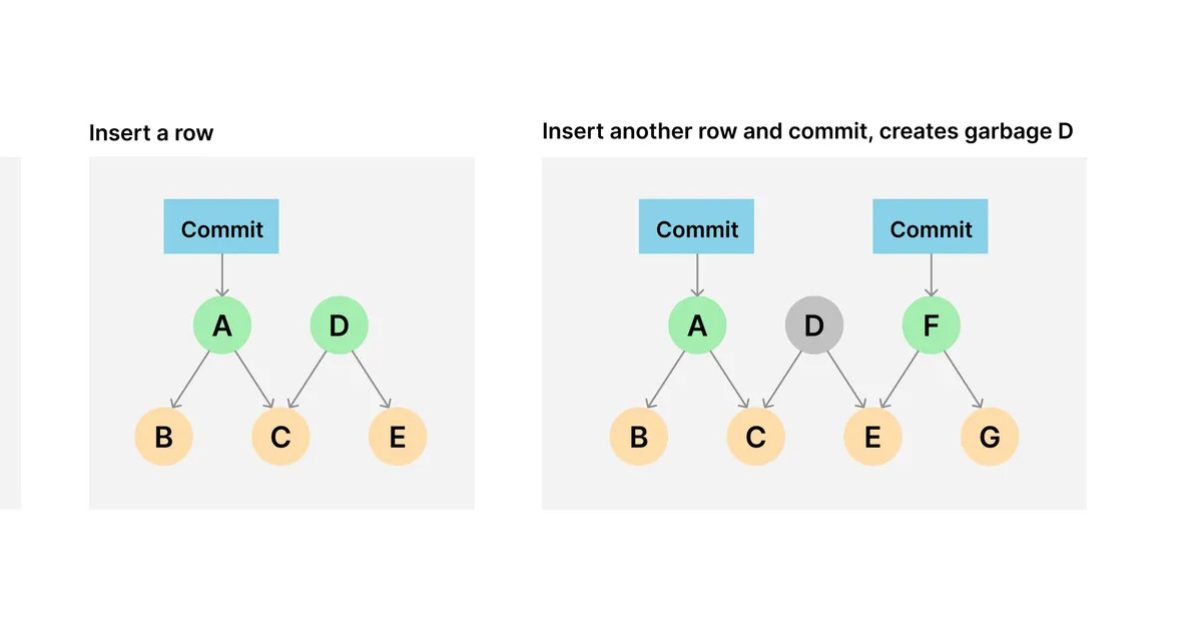
The key feature in Dolt 2.0 is automatic garbage collection, which removes unreferenced data and reclaims disk space without manual intervention. In prior versions, users had to run periodic cleanup commands to manage storage growth, a process that could be error prone and time consuming. The new garbage collection runs in the background, identifying and deleting orphaned data blocks that accumulate through inserts, updates, and deletions.
Compression has also been added to the storage engine. Dolt 2.0 applies compression to database pages, reducing the overall disk footprint for both active and historical versions of the data. The company states that compression can reduce storage usage by up to 50 percent in some workloads, though actual savings depend on the data characteristics and usage patterns.
Support for Large and Vector Data Types
Dolt 2.0 improves handling of large data types, such as BLOB and TEXT fields, which are commonly used for storing binary files, documents, and large strings. The update also extends support for vector data types, reflecting a growing demand for databases capable of handling embeddings and similarity search operations. These changes make Dolt more suitable for machine learning pipelines and applications that rely on vector based retrieval.
Vector data types allow users to store and query high dimensional vectors directly within the database, enabling efficient similarity searches without relying on external vector databases. DoltHub has not released specific benchmarks for vector query performance in Dolt 2.0, but the company has indicated that the feature is intended for developers building AI driven applications.
Background and Context
Dolt was first released in 2019 as an open source SQL database with version control features, including branching, merging, and diffing. It has since been adopted by organizations that require reproducible data workflows, such as data scientists, analysts, and software engineers. The database uses a storage format that tracks every change, allowing users to revert to previous states or compare versions over time.
DoltHub, the company behind the project, also operates a hosted version called DoltHub Cloud, which provides managed instances and collaboration tools. The company is headquartered in the United States and has raised funding from investors including Sequoia Capital and Accel.
The release of Dolt 2.0 comes as the broader database market sees increased interest in version controlled data systems. Competitors include Git based tools such as DVC and LakeFS, as well as traditional databases with temporal features like PostgreSQL with pg_vector and TimescaleDB. DoltHub differentiates itself by combining SQL compatibility with Git like versioning in a single product.
Implications for Developers and Organizations
For developers, the automatic storage cleanup and compression in Dolt 2.0 reduce the operational overhead of managing database growth. Teams that rely on Dolt for collaborative data engineering or machine learning pipelines will benefit from lower storage costs and simpler maintenance. The improved support for large and vector data types also opens up new use cases for the database in AI and analytics workloads.
Organizations that have been hesitant to adopt version controlled databases due to storage concerns may find Dolt 2.0 more attractive. The update does not require changes to existing workflows or schema definitions, meaning users can upgrade to the new version without rewriting applications.
Dolt 2.0 is available immediately as a free and open source download. The company has provided migration guides for users upgrading from earlier versions. DoltHub has stated that future updates will focus on performance improvements for concurrent workloads and expanded support for cloud native deployments.