
The Model Context Protocol (MCP) team has promoted its Enterprise-Managed Authorisation extension to stable status, introducing a centralised authentication system that enables organisations to control access to MCP servers through their existing identity provider. This development was announced by the project team, as reported by Matt Saunders.
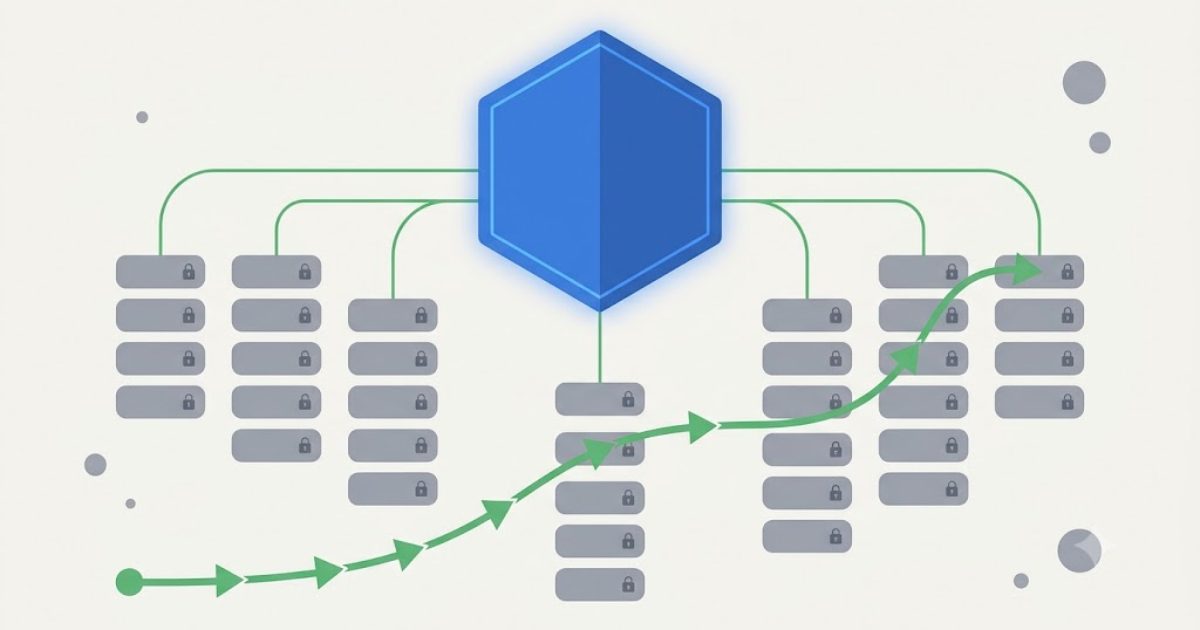
The new system is designed to replace per-server consent prompts that users previously encountered when accessing different MCP servers. Under the updated protocol, end users will sign in once through their organisation’s identity provider, after which they can access approved servers without additional authentication steps or manual setup.
How the System Works
MCP is an open protocol that standardises how applications provide context and tools to large language models (LLMs). Before this extension, each server typically required separate user confirmation, creating friction in enterprise environments where users interact with multiple AI tools and data sources.
The Enterprise-Managed Authorisation extension centralises authentication management. Organisations can define access policies through their existing identity and access management (IAM) systems. Users authenticate once, and the system automatically handles permissions across all approved MCP servers that the organisation has configured.
The project team describes this approach as a zero-touch flow. It aims to reduce administrative overhead and minimise security risks associated with fragmented consent prompts, where users might inadvertently grant excessive permissions.
Enterprise Security Implications
For enterprises, the shift addresses a growing need to manage AI-related data access at scale. As organisations deploy multiple LLMs and AI assistants, controlling which data sources those models can access becomes critical. Centralised authentication allows IT departments to enforce consistent security policies across all MCP-connected tools, rather than relying on individual users to manage permissions.
The extension leverages standard identity protocols such as OAuth 2.0 and OpenID Connect, making it compatible with major identity providers including Azure Active Directory, Okta, and Auth0. This compatibility is intended to ease adoption for organisations that already use these platforms for other applications.
Industry analysts have noted that centralised access control is a common requirement in regulated sectors such as healthcare, finance, and government, where audit trails and compliance reporting are mandatory. The new MCP extension could help these industries adopt LLM tools without compromising data governance requirements.
Developer and User Experience
For developers building on MCP, the extension simplifies server configuration. Previously, each server implementor had to handle authentication logic independently, which could lead to inconsistencies or security gaps. The new standard provides a uniform authorisation layer that developers can integrate with minimal custom code.
End users benefit from reduced authentication fatigue. Instead of approving multiple pop-ups or remembering different credentials for each AI tool, they experience a single sign-on flow that automatically grants them access to the servers their organisation has authorised.
The MCP team has published documentation and reference implementations to assist organisations in deploying the extension. The project is maintained as an open standard, and contributions from the broader developer community are encouraged.
Looking ahead, the MCP team expects to continue refining the extension based on enterprise feedback. Future updates may include support for dynamic permission revocation, session management, and integration with more identity systems. No specific timeline for these additions has been announced, but the stable release signals that the core functionality is ready for production use.