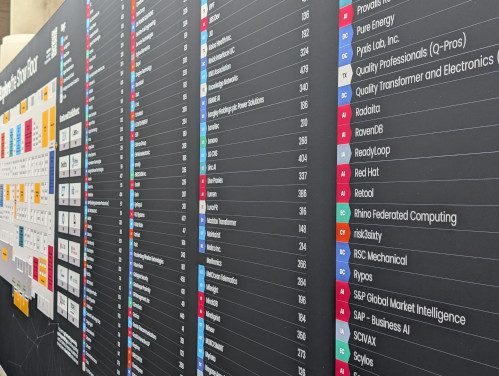

Santa Clara, California — TechEx North America convened industry leaders and enterprise decision-makers in Santa Clara to examine the practical requirements for deploying artificial intelligence across industrial and business environments. The event, held on day one, focused on the infrastructure, security, and power considerations that must be addressed before AI can be reliably integrated into physical operations.
Speakers and exhibitors across dedicated tracks on edge computing, the Internet of Things, data center infrastructure, and cybersecurity emphasized that successful AI adoption depends on resolving challenges related to latency, deployment discipline, and industrial control security. The opening program presented edge computing as a strategic point where companies can reassess the value of their data assets, examine how autonomous equipment makes decisions, and determine the necessary speed of processing.
Edge Computing and Industrial IoT
The Edge Computing track, chaired by Ed Doran of the Edge AI Foundation, featured representatives from Akamai, Spectro Cloud, Scylos, TÜV Rheinland, the OPC Foundation, and Schneider Electric. Sessions addressed scaling edge deployments across multi-site businesses, agentic network operations, distributed inference across on-premises, cloud, and hybrid models, immutable edge infrastructure, and the application of zero-trust cybersecurity principles to control systems.
Discussions in the Industrial IoT and Digital Twins track focused on manufacturing, covering smart factory trends, AI applications beyond Industry 4.0, asset management, and practical roadmaps for moving from pilot programs to full deployment. A recurring topic was the gap between demonstration and deployment, where AI systems that perform well in presentations often stall when integrated with older machinery or legacy software.
A session jointly presented by Rockwell Automation and Ford examined physical AI and connected asset intelligence, specifically addressing the challenge of scaling projects that appear viable in concept but fail in real-world conditions. Speakers asked how intelligence can enter daily operations without becoming an unowned dashboard. Digital twins received similar scrutiny, with multiple speakers calling for operational models that deliver practical benefits to factories, cities, or municipal facilities rather than serving merely as visual replicas.
Data Center Infrastructure and Power Constraints
The Data Centre Congress track addressed major sector issues including construction, power procurement, cooling, water usage, and the network infrastructure required for AI data centers. Keynote speakers and roundtable participants discussed construction delays and power supply challenges, with Santa Clara officials sharing the city’s own data center development experience.
A central theme in infrastructure-focused talks was the relationship between rapidly changing AI economics and the slower maturation of infrastructure projects. Water and power constraints were identified as factors that can cut through rhetoric about the scale of AI adoption. Speakers noted that data centers represent the physical manifestation of AI strategy, where boardroom decisions must align with practical resource availability.
Cybersecurity and Cloud Considerations
The Cyber Security and Cloud Expo track examined the security implications of moving intelligence closer to machines. Sessions explored how distributed inference changes risk profiles, with debate on whether faster local decisions reduce latency and dependence on central cloud services, while raising questions about observability and control. Discussions also covered the application of zero-trust cybersecurity lessons to industrial control systems.
Key Takeaways for Enterprises
Across all tracks, a consistent message emerged: smart systems, whether deeply embedded in engineering sites or operating in back offices, must be designed in coordination with the people or machines they are intended to serve. The event’s integrated program linked ideas between speakers from Siemens, LG CNS, Boston Dynamics, and others, reinforcing that unplanned and disorganized technology implementations do not fit modern enterprise requirements.
The event positioned itself as a venue where the broader picture of AI infrastructure challenges can be visualized, bringing together issues affecting the entire industry under one roof. As AI deployment continues to accelerate, the foundational requirements of power, infrastructure, and security remain central to enterprise decision-making, with the gap between concept and real-world implementation subject to ongoing scrutiny.