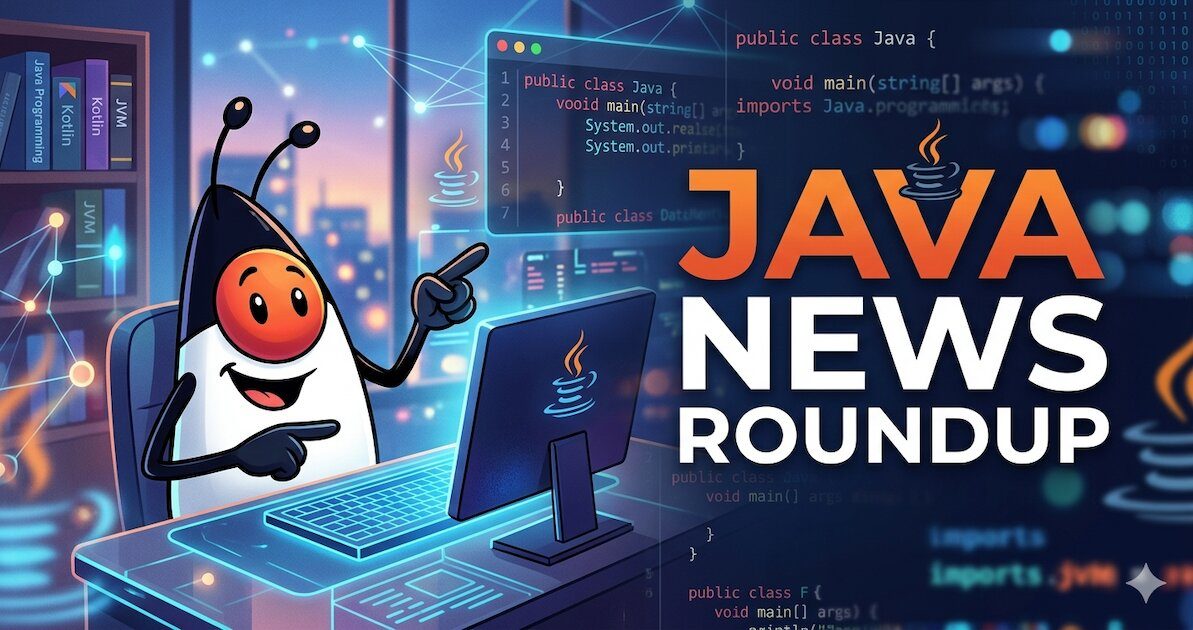

The Java software development ecosystem experienced a significant wave of updates during the week of April 13, 2026. These developments encompassed core platform proposals, enterprise frameworks, and essential tools, indicating ongoing evolution across the Java landscape. The activity highlights the continued investment from multiple organizations in maintaining and advancing technologies relied upon by millions of developers globally.
Within the OpenJDK community, new JDK Enhancement Proposals, commonly known as JEPs, were formally submitted. These documents outline potential features and changes for future versions of the Java Development Kit, the fundamental toolkit for building Java applications. The specifics of the newly proposed JEPs were not detailed in the initial announcement.
Concurrently, the Jakarta EE working group provided an update on the progress of its upcoming Jakarta EE 12 platform. Jakarta EE specifies a set of standardized APIs for building enterprise-grade, web-enabled applications in Java. The update signifies continued development toward a new major release of this critical specification set.
The Spring Framework project, a widely adopted system for building enterprise Java applications, issued maintenance releases. These updates included resolutions for several Common Vulnerabilities and Exposures, or CVEs. Addressing CVEs is a standard practice to patch security flaws and enhance the stability of the software for its user base.
In related Spring project news, the first release candidates for Spring Data and Micrometer Metrics were published. Spring Data simplifies data access across various database technologies, while Micrometer provides a metrics collection facade for monitoring application performance. Release candidates are typically feature-complete versions released for final testing before a general availability launch.
The Apache Software Foundation also released updated versions of two of its projects. Apache Grails, a web application framework, and Apache Camel, an integration framework, both received point releases. These updates generally include bug fixes, minor improvements, and compatibility adjustments.
Development tooling saw updates as well. JBang, a tool enabling developers to run Java code as scripts, released a new version. Furthermore, the Eclipse Foundation announced beta releases for Eclipse Store and Eclipse Serializer. Eclipse Store is a persistence engine, and Eclipse Serializer is a library for object graph serialization; both are in late-stage testing phases.
The collective updates across these diverse but interconnected projects demonstrate the layered and collaborative nature of the modern Java ecosystem. Core platform evolution through OpenJDK JEPs sets the future direction for the language and runtime. Enterprise specifications like Jakarta EE define standard APIs for large-scale applications. Frameworks such as Spring and Apache projects provide practical implementations and extensions that boost developer productivity.
Security maintenance, as seen in the Spring Framework updates, remains a perpetual priority for mature software projects with extensive deployment. The advancement of projects like Micrometer and the Eclipse persistence tools reflects the industry’s growing emphasis on observability and efficient data handling in complex, distributed systems.
Looking ahead, the Java community anticipates further details on the proposed OpenJDK JEPs as they progress through the review process. The release candidates for Spring Data and Micrometer Metrics are expected to move toward stable releases following community feedback. The Jakarta EE 12 specification is likely to continue its development cycle toward a final release, which will subsequently be implemented by compatible application server vendors. The beta status of Eclipse Store and Eclipse Serializer suggests final general availability versions may be forthcoming after the testing period concludes.