
U.S. President Donald Trump on Thursday abandoned a planned executive order on artificial intelligence (AI) after receiving direct appeals from tech billionaires Elon Musk, Mark Zuckerberg, and venture capitalist David Sacks, according to multiple sources cited by Semafor. The last-minute intervention, which occurred between Wednesday night and Thursday morning, effectively killed a measure that would have established voluntary security reviews for advanced AI models before public release.
The executive order had already been delayed several times. Trump told reporters in the Oval Office that he postponed the signing because of unspecified concerns that it might hinder American competitiveness against China. "We're leading China, we're leading everybody, and I don't want to do anything that's going to get in the way of that lead," he said.
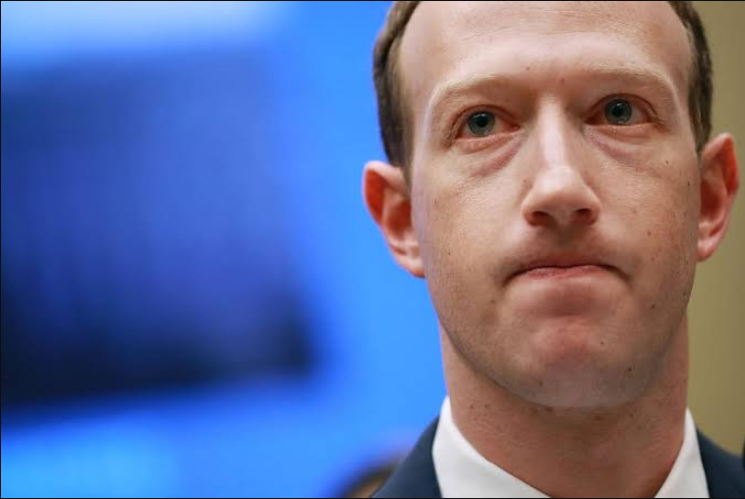
The White House did not disclose the role of the tech executives. Semafor reported that Musk, the founder of xAI; Meta CEO Mark Zuckerberg; and David Sacks, who served until March as Trump's AI and cryptocurrency adviser, each spoke directly with the president to argue against the order.
The Proposed Order Was Minimal
The scrapped executive order was not a broad regulatory framework. It would have created a voluntary mechanism for AI developers to submit advanced models to federal agencies for security review up to 90 days before public release. It included no licensing requirements or mandatory hold periods. Despite its limited scope, Trump described the measure as something that "could have been a blocker."
Supporters of the order inside the administration, including officials at the National Economic Council and in the Vice President's office, had argued for an "accelerationist" approach to AI development. The opposition from Musk, Zuckerberg, and Sacks ultimately prevailed.
Absence of U.S. AI Legislation
The United States still lacks comprehensive federal AI legislation. Existing governance consists of executive orders, agency guidance, and voluntary private sector agreements. In early March, the Trump administration released a National AI Legislative Framework that urged Congress to preempt state-level AI laws, calling for a single national standard.
Congress has not acted on that framework. The federal Centre for AI Standards and Innovation has continued its evaluation agreements with Google DeepMind, Microsoft, and xAI, announced earlier this month, allowing the government to assess models prior to public availability. That program continues regardless of Thursday's cancellation.
China Advancing AI Regulations
Beijing has accelerated its own AI rulemaking. In April, China issued new rules requiring AI companies to establish internal ethics review committees. The State Council's 2026 legislative work plan, released in May, included language on AI governance in formal planning documents for the first time. The National People's Congress has listed AI legislation for review for the third consecutive year.
Earlier this month, during the Trump-Xi summit in Beijing, the two leaders agreed to launch an intergovernmental dialogue on AI, according to China's Foreign Ministry.
Industry Influence on Policy
Thursday's episode highlighted the influence that a small group of industry leaders with direct access to the president wield over U.S. AI policy. Musk's xAI competes directly with OpenAI and Anthropic. Zuckerberg's Meta has positioned itself as a champion of open-source AI development. Sacks, despite leaving his formal advisory role in March, retains enough influence to shape executive action.
Separately, Semafor reported that OpenAI has secured White House backing for a parallel effort to push AI regulations at the state level. This appears to conflict with the administration's earlier executive order that threatened states enacting AI laws disliked by the White House.
In a report by the South China Morning Post, Lizzi C. Lee, a fellow at the Asia Society Policy Institute's Centre for China Analysis, noted that both the U.S. and China are confronting the same fundamental question about where the regulatory frontier should sit.
No timeline has been announced for any replacement AI policy. The administration's National AI Legislative Framework remains pending before Congress. Observers expect continued debate within the White House over balancing innovation with oversight, but no formal action has been scheduled.