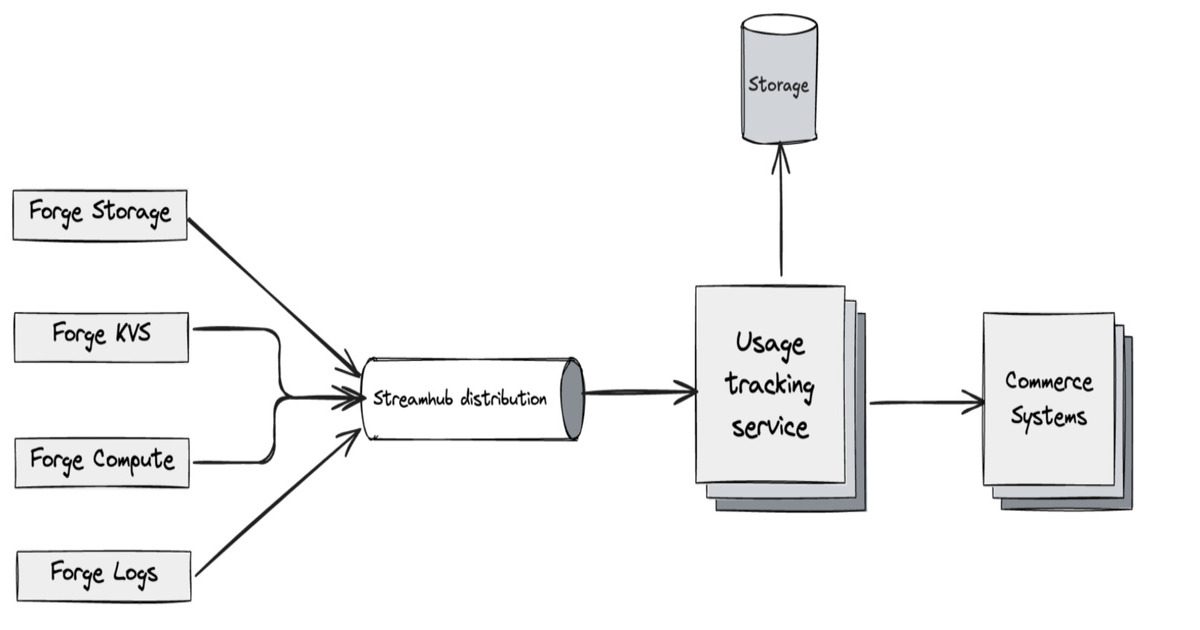

Atlassian has disclosed the technical architecture behind Forge, its billing platform designed to support usage-based pricing across its cloud ecosystem. The company detailed the system in a recent engineering post, explaining how it handles large-scale usage events with accurate attribution, deduplication, and aggregation.
The platform processes usage data from multiple distributed services to enable precise billing, near real-time visibility, and reliable reconciliation. According to the company, the architecture relies on a streaming pipeline, idempotent processing, and layered storage to manage the complexity of tracking usage at scale.
Streaming Pipeline and Idempotent Processing
The core of Forge’s billing system is a streaming pipeline that ingests usage events from various Atlassian cloud products. Each event is processed with idempotent logic, ensuring that duplicate events do not result in incorrect billing charges. The company stated that this approach prevents double-counting and maintains data integrity across the distributed system.
Idempotent processing works by assigning a unique identifier to each usage event. When the system receives a duplicate event, it recognizes the identifier and discards the extra data without affecting the aggregated totals. This is critical for environments where network retries or service failures can cause repeated submissions.
Layered Storage for Efficiency
To manage the volume of usage data, Forge uses a layered storage strategy. Frequently accessed data resides in fast, expensive storage, while historical data moves to slower, low-cost tiers. This design reduces operational costs while still allowing for accurate billing audits and reconciliation. Atlassian confirmed that the storage layers are built on standard cloud infrastructure, though specific vendor details were not provided.
The architecture also includes aggregation mechanisms that summarize usage events over defined time windows. This reduces the number of records that need to be stored long-term while preserving the granularity required for billing disputes or compliance checks.
Near Real-Time Visibility and Reconciliation
Forge provides near real-time visibility into usage metrics for both Atlassian and its customers. The platform exposes API endpoints that allow internal teams and external developers to query current usage data. According to the engineering post, this feature helps customers monitor their consumption and avoid unexpected charges.
Reconciliation is another key capability. The system cross-references usage data against billing records to identify discrepancies. Atlassian stated that reconciliation runs periodically and can flag issues such as missing events or attribution errors. This ensures that invoices match actual consumption across distributed services.
Correct Attribution Across Services
Attribution is handled by embedding metadata within each usage event. That metadata includes the originating service, the user account, and the product context. The system then routes events to the correct billing entity, even when usage spans multiple Atlassian products. The company noted that proper attribution is essential for supporting complex enterprise agreements that involve multiple subscriptions or add-ons.
Distributed services within Atlassian’s cloud ecosystem communicate with Forge through standardized event schemas. These schemas define the required fields and optional properties for each usage type. Validation occurs at the pipeline ingress layer, rejecting malformed events before they enter the processing loop.
Atlassian has not announced a public timeline for releasing Forge’s billing architecture to third-party developers or partners. However, the company indicated that the system is operational for its internal products and could serve as a model for other platform-based billing solutions in the industry. Observers expect further documentation or open-source components to follow as the platform matures.