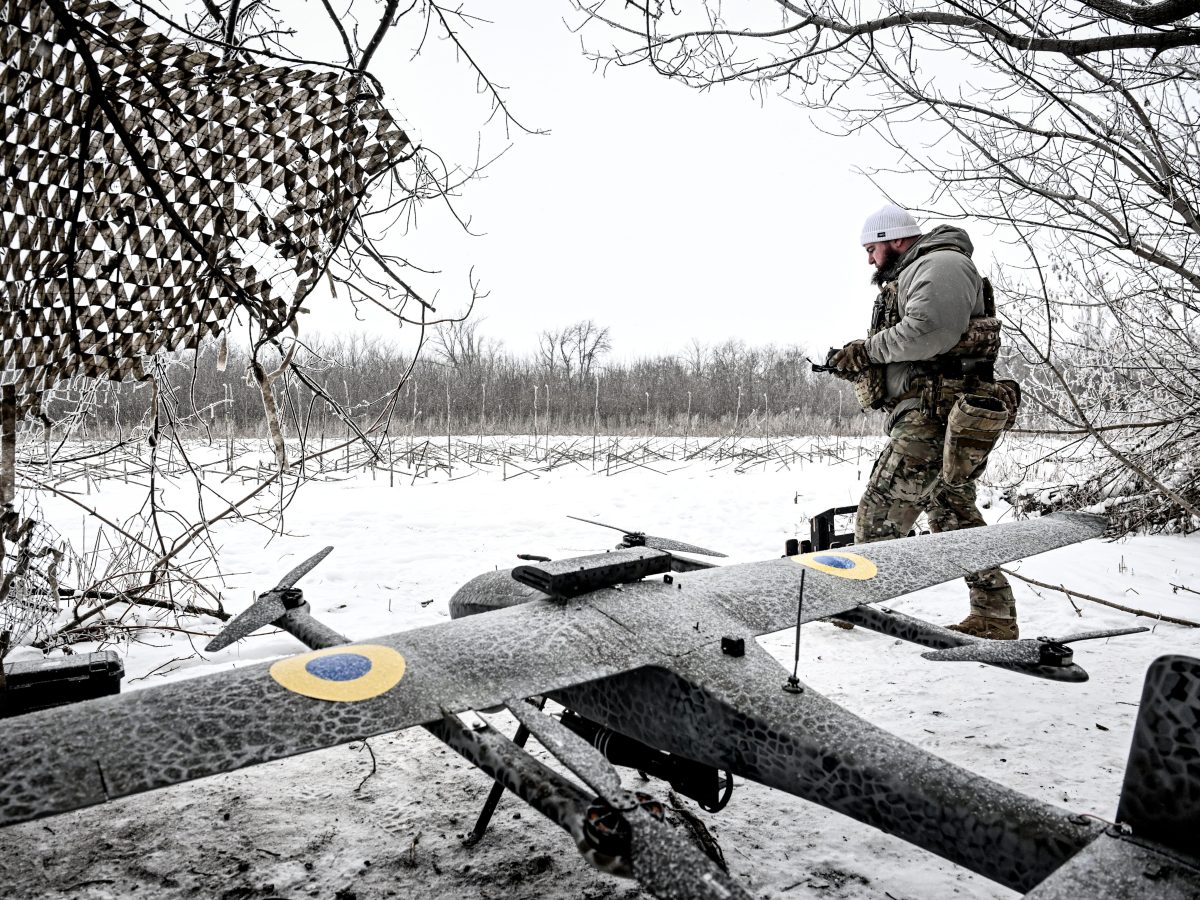

Ukraine is increasingly using a new generation of domestically produced winged drones to conduct strike operations against Russian rear areas, a role previously filled by Western supplied artillery systems. Recent combat footage verified by Business Insider shows these drones successfully hitting targets despite Russian electronic warfare countermeasures.
The drones, capable of flying distances between 30 and 300 kilometers, carry heavier explosive payloads than smaller commercial quadcopters. Analysts say the weapons are helping Ukraine regain tactical momentum after months of territorial losses.
A drone pilot with the Ukrainian National Guard’s Typhoon unit, identified only by the call sign Spring for security reasons, described a June 2025 strike on a house in Zaporizhzhia region. The target was a structure used as a base by Russian first person view drone operators. Spring said the attack was her first successful mission with the new platform.
George Barros, director of Innovation and Open Source Tradecraft at the Institute for the Study of War, said the drones represent a new phase of the conflict. We argue that the Ukrainian mid range strike is actually heralding a new phase of the war. What we are looking at here is a really solid foundation for Ukraine to blunt Russian advances.
Drone Capabilities and AI Integration
The new winged drones are designed to carry payloads capable of destroying command posts, supply vehicles, and air defense systems. Some variants incorporate artificial intelligence systems that allow the drone to autonomously lock onto a target if the pilot loses the control signal due to jamming.
This capability addresses a key weakness of earlier Western weapons. Russia learned to disrupt GPS guidance on rockets fired by the M142 High Mobility Artillery Rocket System, reducing its effectiveness after 2022. The new drones can bypass such countermeasures by switching to autonomous mode.
Declining Role of Western Missile Systems
Ukraine’s reliance on Western weapons for intermediate range strikes has faded in recent months. The M142 HIMARS system, which Ukraine received in limited numbers from the United States, was highly effective in 2022 but saw diminished results as Russia adapted its logistics and electronic warfare tactics.
Mykola Bielieskov, senior analyst for the Ukrainian crowdfunding organization ComeBackAlive, said the peak of HIMARS was in the summer and autumn of 2022. After that, Russian forces learned to move their supplies in ways that made them more survivable. Ukraine also faced restrictions from the US Department of Defense on using longer range HIMARS munitions for certain targets. A monthslong freeze on those munitions was lifted in 2025, but by then the weapon’s overall utility had declined.
British French Storm Shadow cruise missiles remain in use but are too limited in number for sustained large scale operations, analysts said.
Impact on Frontline Operations
Gil Barndollar, a non resident fellow at Defense Priorities, said the drones are affecting Russian logistics in some sectors of the front. He noted that this steadily affects front line forces and makes even the piecemeal Russian infiltration tactics less viable.
Russia has been losing more ground than it has gained in recent weeks, reversing a multiyear trend in which Ukraine had been slowly ceding territory. Barros said the Institute for the Study of War is bullish on the prospects for Ukraine having some substantial upper hand momentum going into the summer.
Ukraine produces the drones domestically, giving Kyiv greater independence in targeting decisions compared to the HIMARS system, which required donor country approval for some strikes. The lower cost per unit also allows for larger scale deployment.
Analysts expect continued development of these drone systems, including further integration of AI based navigation and target recognition. The trajectory of the war in coming months will depend partly on how Russia adapts its electronic warfare and air defense tactics to counter the new threat.